News from newspapers, as it should be
If you’re reading this, you’re likely a loyal reader of the Boothbay Register/Wiscasset Newspaper. And that matters. Your engagement strengthens local journalism and helps us keep our communities informed, connected, and thriving. Thank you!
Last year, something like 136 newspapers across the country closed, an average of about two every week according to Northwestern University’s Medill School of Journalism. The closure of a local newspaper impacts a lot of lives, those who work for the publication along with the communities served by it. Many of the newspapers that ceased publication were weeklies like this one, although many dailies were forced to shut down, or for financial reasons had to cut back their printing from five, to four days a week.
Newspapers' owners blame the closures and cutbacks on the loss of advertising sales and lower circulation. There’s also the higher production and labor costs associated with operating a news organization. Competition from Facebook, Instagram and other social media platforms are to blame as well.
Recently I was discussing this subject over lunch with Kevin Burnham, editor of the Boothbay Register/Wiscasset Newspaper. Together Kevin and I have covered – well, let’s just say, lots and lots of local news over the past 35-plus years. During our conversation, I repeated something I’ve said many times: The communities making up this part of the Midcoast are fortunate to still have two really good weekly newspapers covering the news. The other newspaper of course is The Lincoln County News in Damariscotta.
This is something to take pride in when you consider that in 1980 there were eight newspapers serving the area: three dailies and five weeklies. The dailies included the Portland Press Herald, Kennebec Journal and Times Record. In 2020 the Press Herald eliminated its Monday edition, while the Kennebec Journal, based in Augusta, stopped covering the Midcoast years ago and has combined with Waterville’s Morning Sentinel. The Times Record, once independently owned, is down to publishing just two print editions a week, and is now part of the same ownership controlling the Portland Press Herald. These publications all maintain an online presence with a paywall, which means the reader has to subscribe to it to receive all of its web content. Like other news outlets around New England and across the country, they’ve found themselves competing with Facebook and Instagram.
But, as I pointed out to Kevin, newspapers continue to provide something Facebook and Instagram can’t – a single, reliable place where readers can find a broad mix of information, from major national events to the everyday news that shapes their local communities. Most newspapers now maintain searchable online archives of their reporting, creating an invaluable record of what’s happened over time. When a newspaper closes, future archives disappear taking with it a community’s historical record and the stories that would otherwise preserve its identity. This fact is often left out of the discussion, although I believe people who have seen their local newspaper close understand what I’m talking about and are beginning to realize what’s been lost.
The most important function of a local newspaper is to provide the community with information, i.e., news of births, deaths, marriages, anniversaries, fires, accidents, arrests, real estate transactions, plus what’s happening in the schools, and within the local business community; all of this, along with reporting the goings on at the town office and county courthouse. I’ve said before, and it bears repeating, you can’t get this information from any single social media site. Instead, you have to visit a dozen different Facebook sources, and as far as actual news is concerned there’s a risk of getting a mischaracterization of the facts. The really important difference between newspapers and social media is that newspaper content online, or in print, is gathered and edited by professionals, people trained to gather facts and report what’s taken place in an easy to understand and objective form. Not so with social media, where anyone can post whatever they want.
At the local level, I still believe the best source for accurate reporting and information comes from a newspaper, online or in print. They contain the stories that define who we are as communities and continue to provide a reference source for generations to come.
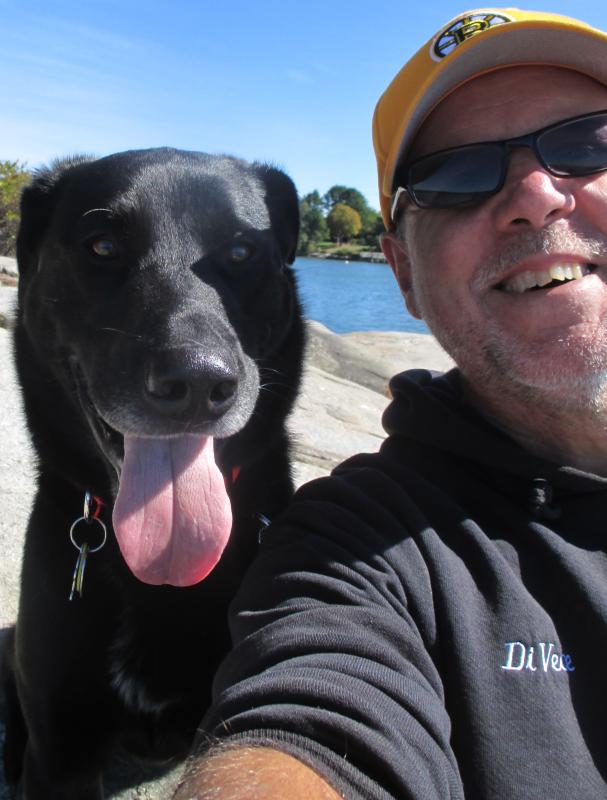
Phil Di Vece earned a B.A. in journalism studies from Colorado State University and an M.A. in journalism at the University of South Florida. He is the author of three Wiscasset books and is a frequent news contributor to the Boothbay Register/Wiscasset Newspaper. He resides in Wiscasset and can be contacted at news@wiscassetnewspaper.com