Summer Bird Road Trip, Anyone?
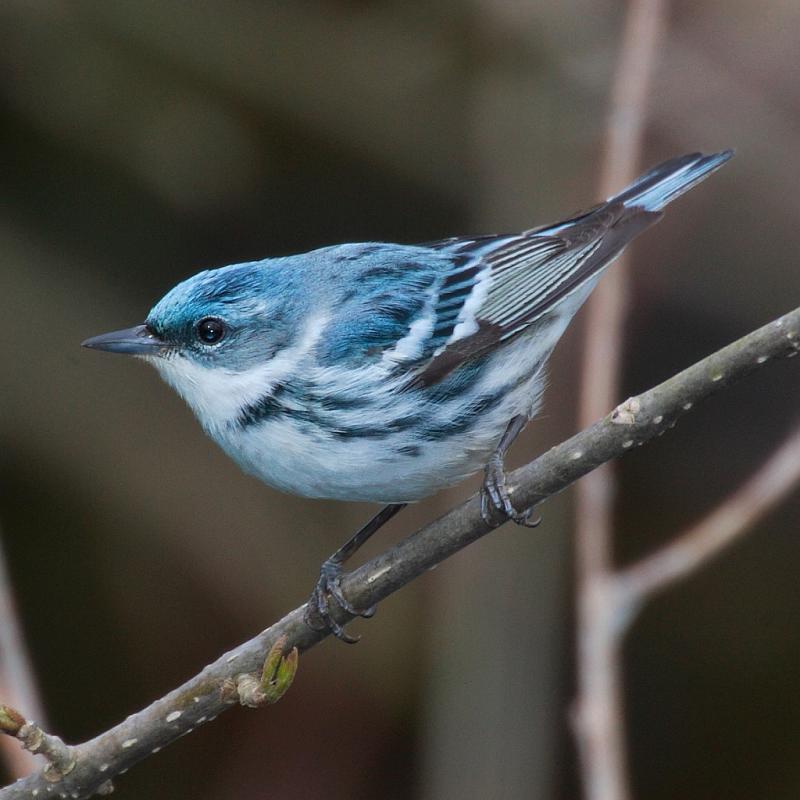 Cerulean warblers show up in Maine only as a rare migrant, but they can be found in summer as close as western Massachusetts. Photo by mdf, courtesy of Wikimedia Commons.
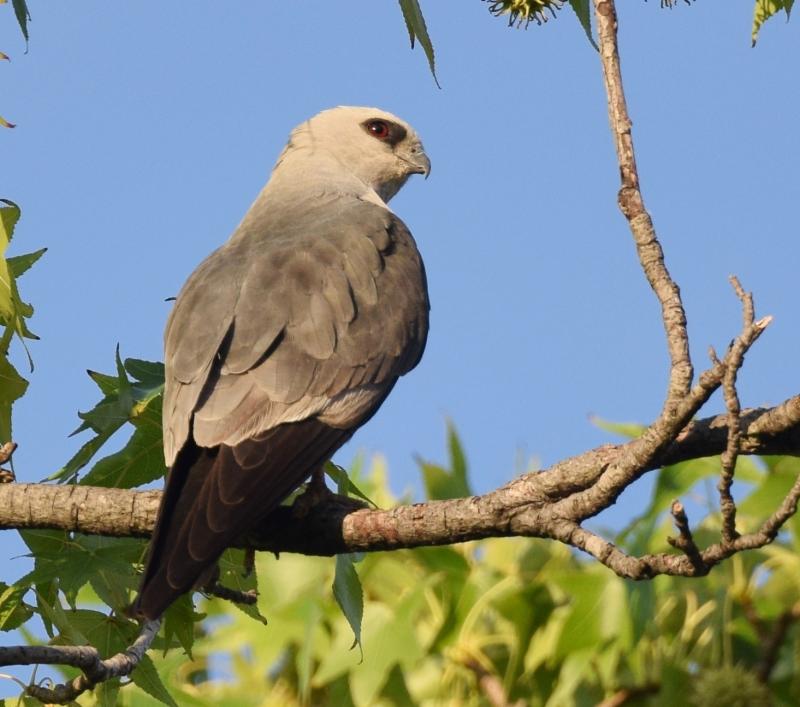 Mississippi kites are a species that most people would associate with the southeastern U.S., but a small, isolated breeding colony now exists in southern New Hampshire. Photo by Wildreturn courtesy of Wikimedia Commons.
Cerulean warblers show up in Maine only as a rare migrant, but they can be found in summer as close as western Massachusetts. Photo by mdf, courtesy of Wikimedia Commons.
Mississippi kites are a species that most people would associate with the southeastern U.S., but a small, isolated breeding colony now exists in southern New Hampshire. Photo by Wildreturn courtesy of Wikimedia Commons.
Mississippi kites are a species that most people would associate with the southeastern U.S., but a small, isolated breeding colony now exists in southern New Hampshire. Photo by Wildreturn courtesy of Wikimedia Commons.
Cerulean warblers show up in Maine only as a rare migrant, but they can be found in summer as close as western Massachusetts. Photo by mdf, courtesy of Wikimedia Commons.
Mississippi kites are a species that most people would associate with the southeastern U.S., but a small, isolated breeding colony now exists in southern New Hampshire. Photo by Wildreturn courtesy of Wikimedia Commons.
It may seem early to be thinking of summer, given it’s still early May, but the excitement generated by some rare birds found recently here in Maine has made us think about the places from where those birds originated.
A prothonotary warbler made an appearance in Berwick. The “golden swamp warbler” (as Audubon called it) is a species you might imagine having to travel to Florida or other parts of the southeastern U.S. to see. Surprise, surprise! You could reliably see one of these magnificent warblers—or hear its ringing “tsweet, tsweet, tsweet, tsweet” song—as close as southern New Jersey, where they are regular breeders. They also at least occasionally breed in and around Montezuma National Wildlife Refuge at the other end of Cayuga Lake from Ithaca, New York, where the Cornell Lab of Ornithology is located (and were we spent treasured years). We’ve been fortunate enough to see and hear prothonotary warblers in both places, and both are more than 300 miles and a seven-and-half hour drive from Augusta, Maine. And yet, interestingly, there are scattered male prothonotary warblers that appear to be on territory every year even as close as Massachusetts—a mere three or four hours’ drive from Augusta. A few of these have found a female and even nested, according to Massachusetts Audubon’s Breeding Bird Atlas 2.
We remember the first time we saw the gorgeous sky blue of a male cerulean warbler as it hopped on the granite rocks and coarse sand of Swim Beach on Monhegan Island one May day many years ago (it was there the same time as Maine’s first swallow-tailed kite was also on the island). Here in Maine, the sighting of a cerulean warbler remains a special treat, a rare sighting never forgotten. The stronghold for cerulean warblers is in the forested areas of the Appalachians and Upper Mississippi watershed. Amazingly, cerulean warblers have been documented breeding in western Massachusetts. Just last year, observers reported as many as five in Skinner State Park near Amherst, a drive of about four hours from Augusta.
It seems crazy to say that a bird with a name like the Mississippi kite, a small, pearly gray raptor, could be found anywhere near the state of Maine. That’s why it’s shocking to know that there’s a small isolated northern breeding outpost of Mississippi kites in and around Durham, New Hampshire,—and it has been there for 18 years! That’s less than a two-hour drive from Augusta.
One of the most secretive and sought-after bird species in North America, at least by serious birders, is the yellow rail, a nocturnally active bird that nests largely in northern marshes of Canada and winters in salt marshes along the Gulf Coast and Atlantic Coast from the Carolinas to Florida. Their mating vocalization is a rather inconspicuous tapping sound not unlike what you would hear if you tapped two small stones together. Yellow rails have very rarely been detected in Maine. So it may come as a surprise to learn that yellow rails are consistently found only about four-and-half hours away from Augusta, in Quebec, along the St. Lawrence River. Apparently, they were once much more abundant and widespread, but even in recent years, there are yellow rails found each summer in the area.
Anyone up for a road trip?
Jeffrey V. Wells, Ph.D., is a Fellow of the Cornell Lab of Ornithology and Vice President of Boreal Conservation for National Audubon. Dr. Wells is one of the nation's leading bird experts and conservation biologists. He is a coauthor of the seminal “Birds of Maine” book and author of the “Birder’s Conservation Handbook.” His grandfather, the late John Chase, was a columnist for the Boothbay Register for many years. Allison Childs Wells, formerly of the Cornell Lab of Ornithology, is Senior Director of Communications at the Natural Resources Council of Maine, a nonprofit membership organization working statewide to protect the nature of Maine. Both are widely published natural history writers and are the authors of the popular books, “Maine’s Favorite Birds” (Down East Books) and “Birds of Aruba, Bonaire, and Curaçao: A Site and Field Guide,” (Cornell University Press).