From Wiscasset student to marine biologist
 WES teacher Becky Hallowell and Wiscasset alumnus Will Black, marine biologist. Cynthia Young photo
  Cynthia Young photo
WES teacher Becky Hallowell and Wiscasset alumnus Will Black, marine biologist. Cynthia Young photo
Cynthia Young photo
Cynthia Young photo
WES teacher Becky Hallowell and Wiscasset alumnus Will Black, marine biologist. Cynthia Young photo
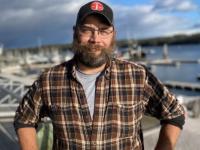
Cynthia Young photo Will Black was educated in the Wiscasset schools, graduating in 2009, and years after sitting in Becky Hallowell’s classroom as a student, he returned to share his knowledge and experience with Wiscasset’s fourth graders. This time, he was there as a marine biologist.
Black now works for Muscongus Bay Aquaculture, where he spends his days on the water helping grow oysters. During his visit, he gave the fourth-grade students a hands-on look at the fascinating world of oyster farming and the science behind it.
He explained that oysters begin incredibly small, about the size of a pinky fingernail. As they grow, they move through different stages and different types of equipment designed to help them develop strong shells. The farming operation uses tubes, bags and cages, and Will described how the equipment is regularly flipped and tended as the oysters grow.
He brought examples of the equipment used to grow oysters and explained how each stage of the process works. The oysters begin their journey in special tumbling tubes, which can hold about 5,000 young oysters. As the oysters grow, they are moved into pillow bags, which can hold thousands of oysters and are placed inside cages. Eventually, the oysters move into larger bags called “hog bags.” The name comes from where the bags are used—Hog Island. Each hog bag can hold about 1,000 oysters. The bags are attached to ropes in the water, and Black explained that there are about 100 bags on a line and 90 lines at Hog Island.
Part of Black's job is getting out on the water to tend the oysters. The bags and cages are regularly flipped and moved. This allows the oysters to tumble and shift, helping them develop strong, sturdy shells as they grow.
For the students, seeing the equipment and hearing about thousands of oysters growing out in the river helped bring the process of oyster farming to life. This wasn't a lesson where the students simply sat and listened. They got to see, touch and investigate. Black cracked open an oyster and students could look closely at what was inside under a microscope.
Black explained that oysters don't have a brain or nerve endings like people do, and they don't have pain receptors. They are sedentary animals, meaning they don't swim around or move from place to place. Once an oyster settles, it essentially stays where it is. It gets the oxygen it needs from the water flowing around it.
Oysters are also filter feeders. They take in tiny organisms such as microalgae and plankton from the water. As they feed, they filter the water around them, making oysters an important part of a healthy marine ecosystem. And oysters are an important part of the food chain. Black explained that they are eaten by a variety of animals, including seagulls, great blue herons, eels, otters and seals. Of course, people eat them, too.
The students also learned about the reputation of Maine oysters. Black told the students that Damariscotta River oysters are considered some of the best in the world, and they are shipped to customers all over the country.
With real oysters and oyster-farming equipment in front of them, the students had plenty of questions. How long does it take an oyster to grow? Can oysters swim? How do the tiny oysters stay inside the tubes? Do oysters have babies?
Black answered question after question, sharing the science of oysters, and what it's like to make a living working on Maine's waters.
For Becky Hallowell, having Black back in her classroom made the visit especially meaningful. She had known him when he was a student, and now she was watching him share the knowledge he had gained through his education and career with her current students. There is something special about watching a former student return to the school that helped shape him.
Black's story is also a reminder of the impact a small local school can have. A child who grows up learning in Wiscasset's classrooms can eventually find his way into a career in marine science, return to those same classrooms years later, and become the person teaching the next group of students.
For the fourth graders, Black's visit was a lesson about oysters. But it was also a lesson about curiosity, hands-on learning and the possibilities that can grow from a good education and a connection to the world around us. Sometimes the best examples of what a school can do are the students who come back through its doors and show us just how far they have gone.