In the Camp Kitchen -- A Legacy Feeds Community
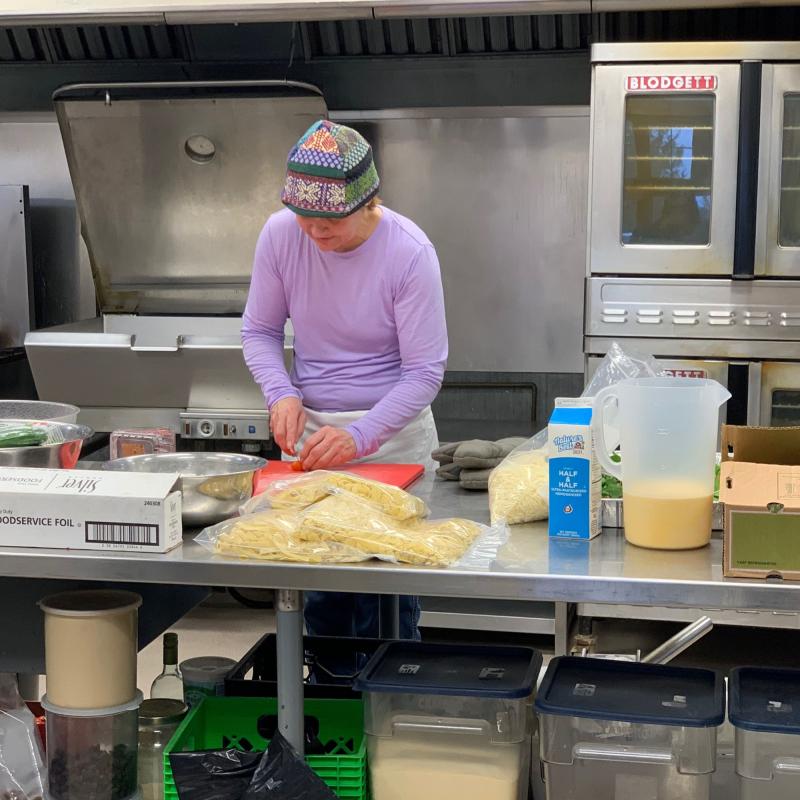 Lee Giberson in the kitchen at Camp Kieve. Courtesy of Emily Whiting
Lee Giberson in the kitchen at Camp Kieve. Courtesy of Emily Whiting
Lee Giberson in the kitchen at Camp Kieve. Courtesy of Emily WhitingIn the heart of winter, Camp Kieve is quiet. The cabins are swept clean and locked tight. No trace of wet swimsuits or half-finished puzzles. No backpacks left behind, heavy with headlamps, binoculars and hand-scrawled maps. No letters from home tucked beneath mattresses. In a few short months there will be a line of cars snaking up the road from Reunion Station, delivering young campers to the promise of summer. But for now, there is only the sound of wind coming off Damariscotta Lake, whistling through the pine trees, as Lee Giberson guides her Subaru Outback through the camp’s entrance and up the hill toward Pasquaney Hall. Her headlights flicker briefly across the windows of the house where Sam Kennedy’s family still sleep in their warm beds. It is 5:30 in the morning.
In a few hours Sam will rouse his kids Stella, Marty and Maeve, and turn to the work of managing Kieve Wavus Education on the 500-acre property that has been led by his family for four generations. But for now, Lee is alone in Pasquaney Hall, the kitchen she has called her professional home for more than 25 years. Lee knows the camp’s rhythm better than anyone. At 5:45, the delivery truck will arrive with provisions for the week.
While she waits, Lee feeds Steve, the campus cat. She puts puts the soup pot on the stove to be filled with the onions, potatoes, and carrots that will arrive momentarily from Rising Tide. Lee looks out the windows as the first light of day gradually awakens the stretch of horizon over the lake. She can just make out the shapes of Swim Island and Big Island. The pine walls of the dining hall lean into the sun’s warmth, the photographs hanging there a testament to the camp’s history.
Don Kennedy founded Camp Kieve in 1926 as a center for experiential learning. A Philadelphia schoolteacher with progressive ideas, Don imagined a place where campers learned by doing — by paddling and climbing and exploring. Equally important, Don imagined the boys gathering at long wooden tables in a dining hall that would be the soul of the place, where they would pass bowls, make friends and learn each other’s stories. Pasquaney Hall was one of the first buildings to stand as evidence of Don’s vision. This is where the community is fed.
Later, Don's wife Harriet ran the camp for two decades, steady and practical. The couple had been introduced by Harriet’s brother, who had attended the camp. The stags’ heads that flank the windows to Pasquaney Hall’s kitchen are Harriet’s work. So is the ethic of responsibility and compassion that remains a guiding principle of the camp today.
Don and Harriet’s son Dick needed no microphone to command the campers’ attention when he took over the camp. In Bean boots and a yellow sweater, Dick had a huge heart and championed the underdog, always. Among other antics, Dick was famous for popping out his dentures to break the ice for newcomers. In time, Dick’s son Henry took the reins. Anyone will tell you that Henry lives in the moment, but he planned for the future. Under his leadership the table grew longer with new programs, a merger with Wavus Camp in 2005, and the evolution of The Leadership School for local school children. Each summer morning for 32 years, Henry began his day on the porch of the dining hall with coffee in hand, planning with his team as the morning mist lifted from the lake. He often had his son in tow. Young Sam would furiously peddle his bike up the hill behind his father, and settle into a chair with a cup of hot chocolate to absorb the adults’ conversations about staffing, budgets and menus.
And in that manner, Sam learned his responsibilities as steward of the camp’s values. No one minded if young Sam was in the kitchen learning to make omelets from John Roy or draining chocolate milk from the old milk machine. The campers only feigned surprise when Sam and his sister Blair would leap out from the dark corners of the dining hall dressed as super heroes. At age eight, Sam became a card-carrying camper. At 14, he proudly paddled in a rite of passage camp trip to the border of Canada. When the water in their cooking pots froze solid, the campers made do. In high school Sam worked with the maintenance crew. At 18, he became a counselor, responsible for 13 boys each summer, cooking chicken bacon ranch wraps over open fires on Otter Island or stuffing pita pockets with peanut butter, jelly, and Snickers “Rocket Fuel” bars to power the campers up Mount Katahdin. When Hurricane Bob hit in 1991, Sam recalls that the entire camp huddled in the dining hall. Outside the windows, white caps raged across the lake.
Rainy days in summer turned Pasquaney Hall into a cathedral of chaos—Shenanigans, board games, dance contests, slippery floors and steaming vats of soup. Counselors made theatrical announcements from the porch. Campers clamored for the “Caddie Stack,” a stunt performed by then Wilderness Tripping Director Garrett Phillips with Camp Director Caddy Brooks balanced improbably on his shoulders. Pancake flips sent batter to the rafters, leaving sticky fingerprints on every door knob. On Sundays, the youngest campers shucked corn for barbecued chicken.
Family suppers at Sam’s grandparents’ house were an important tradition for the Kennedys. Dick always said grace: “Keep us ever mindful of the needs and feelings of others.” No one worried about dog hair on the needlepoint chairs. Under the table, Sam and his cousins untied their parents’ shoelaces and stifled laughter, but they were listening.
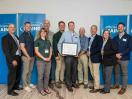
Dick died in 2016. During the pandemic the campus fell silent. No shouts from the dock. No dinner bell calling campers to gather. Camp Kieve’s commercial kitchens stood empty. The staff needed work. Down the road and across the county, families needed food. It was sobering. And motivating. Sam remembers getting together with camp Director of Education and Operations Charlie Richardson to talk things over. Before long, Kieve Wavus Education was teaming with Healthy Lincoln County, Rising Tide Community Co-op, and area restaurants and grocery stores to launch the Lincoln County Food Initiative. In 2025 alone, 6,400 ready-to-heat meals were delivered to five food pantries across Newcastle, Wiscasset, Jefferson, Waldoboro and Boothbay — nutritious dinners for seniors, for families, for anyone in need. What had begun as an act of necessity during the pandemic became a year-round extension of the organization’s summer mission. The camp transformed the quiet months — from the week after Thanksgiving through early spring — into a season of service that includes retreats for cancer patients and programs for veterans, along with The Leadership School.
For nearly 30 years, Lee Giberson has been a constant presence in the work and mission. Along with Ellen Harrington and Anna Gregg in the kitchen at Kieve and Aaron Holland, Shannon Richards and Hank Kleinschmidt at Camp Wavus, Lee has helped turn all of these ideas into a reality for the community. Campers or no campers, winter or summer, the work of feeding does not wait for June.
As morning settles over the lake on this winter morning, the camp flag snaps in the wind. Lee ties on her apron. Pasquaney Hall breathes, warmed by the stove. Down the road lined with pine trees, Sam’s children wake in their house just across the pond from their great-grandparents’ home.
Keep us ever mindful of the needs and feelings of others. In Pasquaney Hall, that prayer is answered — one meal at a time.
Lee’s Haddock Chowder
Melt half a pound of butter in a large pot. Add 4 cups onions, 2 cups celery and sauté until translucent. Season with salt, pepper and thyme. Add four cups of water and a few pounds of haddock. Poach for 10 minutes before adding 20 quartered red potatoes and three quarts of half-and-half. Cook until potatoes are tender. Garnish with fresh thyme. Salt and pepper to taste.