Inside and outdoors: WMHS ocean and climate class
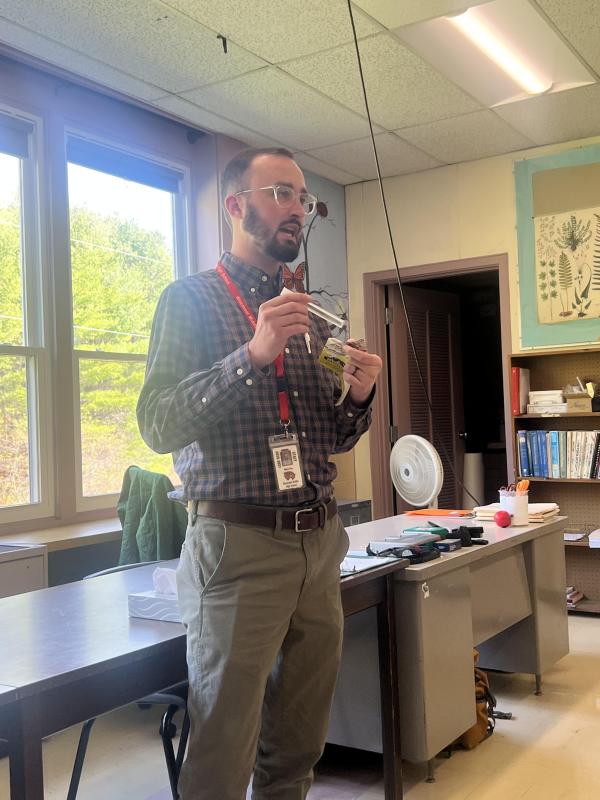 WMHS teacher Wyatt Ray. Cynthia Young photo
 Cynthia Young photo
WMHS teacher Wyatt Ray. Cynthia Young photo
Cynthia Young photo
Recently, students in Wyatt Ray’s Ocean and Climate class at Wiscasset Middle High School got a hands-on look at the science they have been studying. The class headed to Marsh River Preserve in Newcastle, owned by Midcoast Conservancy, to explore a salt marsh estuarine ecosystem up close.
Ocean and Climate is the physical science elective course offered in the first semester. In the second semester, students can choose to continue with Marine Life, which covers the life science side of the subject.
At the preserve, students recorded the date, time, and weather conditions, along with anything they could see, hear, feel, or smell. They documented how they collected their data and sketched the site. They spotted several species of waterfowl and horseshoe crabs, and noted the unique vegetation that grows around the salt marsh. They also collected water samples to take back to school.
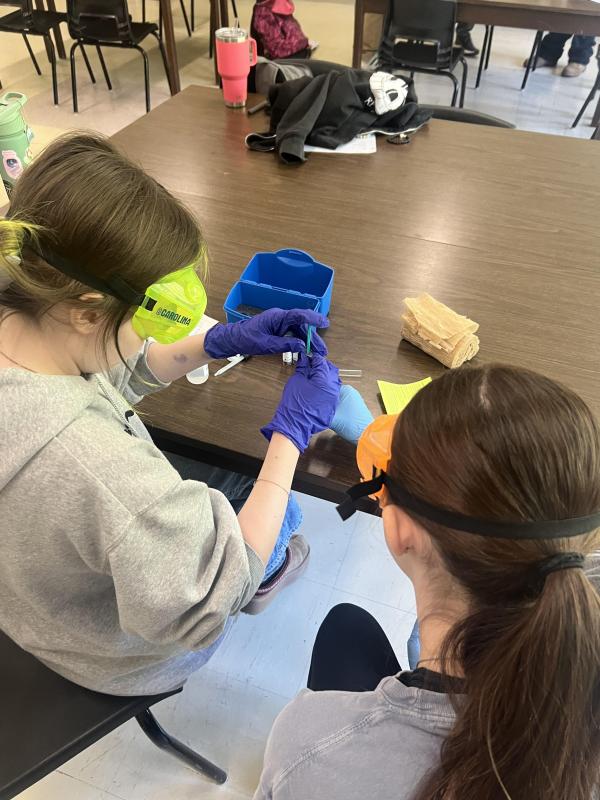
Back in the lab, students worked in small groups, wearing protective gear, to test the samples for phosphates, nitrates, salinity, dissolved oxygen, pH and hardness. Along the way, they learned how everyday sources of pollution, such as fertilizers, leaking septic systems, and farm animal waste, can add nitrates and phosphorus to waterways and harm water quality.
The testing also turned up some surprising lessons about water chemistry. Leaves and other plant material make water more acidic, while some minerals and ions from the sediment make the water more alkaline, which helps to support shelled organisms like clams and lobsters. Students also learned that oxygen dissolves better in cold water than in warm water, which is why fish tend to gather in the deepest, coldest parts of lakes.
Students also studied the units of measurement, descriptions, and importance of several key water quality indicators: Dissolved oxygen, pH, conductivity (specific conductance), turbidity, temperature, metals, nitrates and phosphates.
The learning will continue next month, when the class returns to the field to collect another round of water samples for lab analysis and to conduct a plankton tow.