A line of support

Domestic Violence Awareness Month may be over, but the work isn't for New Hope Midcoast (NHM). Supporting survivors from Sagadahoc, Lincoln, Knox and Waldo counties is a round-the-clock effort for the 42 employees and volunteers who man the organization's 24/7 help hotline.
Each volunteer is supported by a staff member, who, in turn, is overseen by a supervisor. This ensures survivors get a timely response and access to the specific help they need.
During NHM's last fiscal year, they received 1,936 calls, translating to about 1,400 clients. These figures have remained consistent over the past few years, according to Education and Outreach Director Lori Rodriguez. She explained the call-client divide accounts for return callers who may be speaking with an advocate about ongoing civil or legal proceedings, setting up an in-person appointment, or just seeking a listening ear.
"Sometimes people think that, in order to reach out to our helpline, they need to want to leave or need to be in a place where they are going to be asked to make all these decisions. That's not really the case," said Rodriguez.
Volunteers complete 44 hours of Comprehensive Advocacy Intervention Response and Ethics Training (CAIRET), which covers basic information on domestic abuse/violence, what services NHM provides, local supports available to people experiencing other related issues, such as homelessness or substance use, and more. Rodriguez categorizes the approach as "social change advocacy."
"(We're) really thinking about things like, how to validate feelings, ask questions, connect with survivors, and help them strategize and implement safety plans for their futures.”
Advocates are also trained to spot increased risk for homicide, such as the presence of firearms or past strangulation. In recent years, Maine has enacted stricter gun legislation to partly address this issue. A yellow flag gun law was passed in 2019, allowing police to ask a judge to order someone to relinquish their guns if a mental health professional agrees that the individual is suicidal or poses a threat.
In 2025, the Extreme Risk Protection Order (ERPO), a red flag gun law, was added. Family, household members, or police can now petition a court to restrict a person’s access to dangerous weapons (including firearms) if they pose a significant danger of causing physical injury.
Alliance for Hope International reports that 68% to 80% of female domestic violence survivors experience near-fatal strangulation, which increases their homicide risk by 750%.
In Maine, domestic violence aggravated assault by nonfatal strangulation or suffocation is a Class B felony, carrying a maximum sentence of 10 years. Efforts have been made to elevate it to Class A status, including a bill that originated from the teamwork of Boothbay Harbor Police Chief Doug Snyder and former Rep. Holly Stover. However, it did not pass.
"It's really shocking and sad as an advocate to hear about strangulation and firearms as often as we do," said Rodriguez.
Most calls to NHM involve safety planning, whether it's an emergency placement that needs to happen within a few hours or long-term accommodations. Due to the large overlap between domestic, child, and pet abuse, helping survivors stay united with their kids and pets during the process is an important part of NHM's response, said Rodriguez.
NHM partners with hotels and motels to temporarily place people with urgent needs, with options for those with children or pets, as well as pet boarding and animal shelters. Advocates can also walk people through adding children/pets to protection orders.
Sometimes helping survivors also involves connecting them with services that affirm their cultural backgrounds or identities, which is why NHM works with the Wabanaki Women's Coalition, MaineTransNet, Immigrant Resource Council and other organizations.
In 2017, the Center for Disease Control and Prevention reported higher rates of domestic violence in the past year among people who self-identified as Hispanic (8.6%), Black (9.4%), American Indian/Alaska Native (8.2%) or multiracial (12.5%), compared to their non-Hispanic white counterparts (5.7%). The Human Rights Campaign similarly reports LGBTQ people, especially transgender individuals, as more likely to experience intimate partner violence.
“Domestic abuse isn't disproportionately impacting these communities because there's something wrong with them. It's disproportionately impacting them because they are vulnerable because of the larger societal oppression that they experience, and people who are abusive exploit vulnerabilities."
Rodriguez said it's important to recognize identity-based groups as a huge source of resilience, strength, and resources for people.
But NHM can meet these support needs only with its dedicated staff and volunteers. Bucking the national trend for domestic violence organizers, NHM has retained a healthy volunteer crew, many who have stayed on for years. Some are even past staff and interns who have returned to offer their time.
"We really try to just communicate to (volunteers) that they're valued. They are a really important part of this response to domestic abuse and violence. I hope that they stick around because they feel that.”
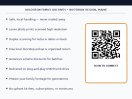
However, more volunteers are always needed. NHM is conducting an online volunteer training course in January. Visit their website for more information.
If you are experiencing domestic violence, contact NHM on their website, Facebook page, or at 1-800-522-3304.