Appreciating Bird Migration
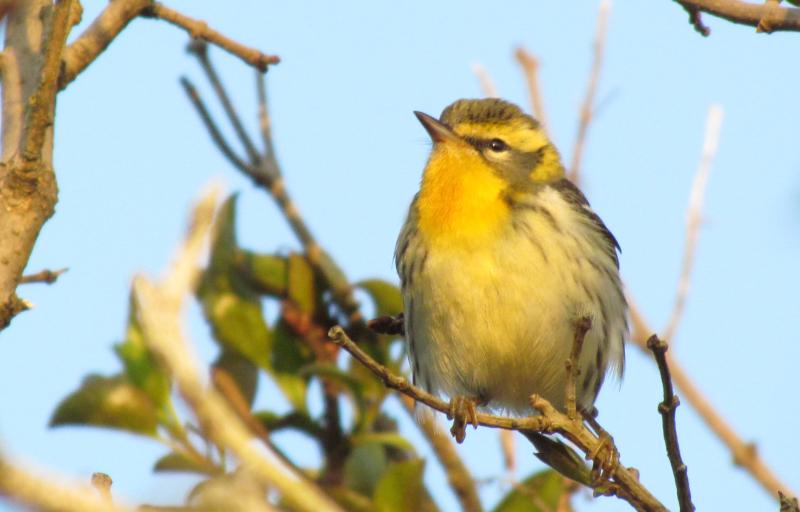 It's the time of year when the so-called "confusing fall warblers" can be found in forests and shrubby patches across the state as they migrate south for the winter. Courtesy of Jeff Wells
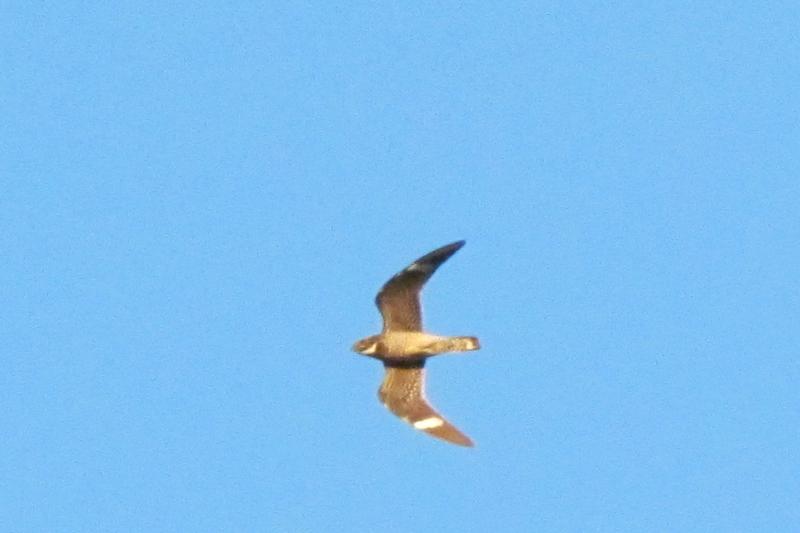 Fall migration is underway, as evidenced by the thousands of common nighthawks that have been streaming overhead through locations across Maine each evening during the past week. Courtesy of Jeff Wells
It's the time of year when the so-called "confusing fall warblers" can be found in forests and shrubby patches across the state as they migrate south for the winter. Courtesy of Jeff Wells
Fall migration is underway, as evidenced by the thousands of common nighthawks that have been streaming overhead through locations across Maine each evening during the past week. Courtesy of Jeff Wells
Fall migration is underway, as evidenced by the thousands of common nighthawks that have been streaming overhead through locations across Maine each evening during the past week. Courtesy of Jeff Wells
It's the time of year when the so-called "confusing fall warblers" can be found in forests and shrubby patches across the state as they migrate south for the winter. Courtesy of Jeff Wells
Fall migration is underway, as evidenced by the thousands of common nighthawks that have been streaming overhead through locations across Maine each evening during the past week. Courtesy of Jeff Wells
We made our migration back from North Carolina last week after an enjoyable but brutally hot, humid time there as we recounted in last week’s column: https://www.boothbayregister.com/article/land-carolina-chickadee/273445). The drive, made over two days, had its usual share of trials and tribulations: traffic congestion and rain showers causing slowdowns, confusing exit directions adding extra time to a gas fill up, traffic accidents (thankfully, not involving us!), bad food, lumpy beds.
We were thrilled when we crossed over the bridge into Maine and even more so when we arrived home soon after.
During our visit to North Carolina, we had seen a large flock of chimney swifts that we guessed were likely migrants; the lack of their familiar twittering overhead in the days after we returned home to Maine was consistent with that guess. Walking our little black dog one afternoon near our house, we heard the unmistakable “bink” calls of several bobolinks heading south high overhead. That night, we heard the short, high-pitched night flight calls of migrating warblers.
Bird migration is now underway in force.
As unpleasant as our “migration” back to Maine was from North Carolina through the Washington-Baltimore-New York City-Boston urban corridor, it pales in comparison to what these migrating birds are facing.
They have to find the avian equivalent of restaurants along the way. For a warbler, that may be a forested park or even just a tree-lined street in heavily urbanized places like those we drove through in New York and New Jersey. For a lesser yellowlegs or a solitary sandpiper, the “restaurant” will need to be a shallow wetland. A flock of red knots or semipalmated sandpipers must dine at a coastal mudflat or beach.
Chimney swifts will need a place where there are lots of high-flying insects. What will be trickier, though, for the chimney swift, will be finding the avian equivalent of the good hotel. They spend their nights roosting in tall chimneys or tall hollow trees, both of which could be as hard as finding an available room in your favorite hotel on a busy summer travel day. Although we may have to put up with a lumpy mattress, for a chimney swift, not finding a place to spend the night could be dangerous. It might require roosting in a place that doesn’t offer protection from the elements or that puts them at risk from predators. Not finding a good place to spend the night might even cause them to have to keep flying into the night and not get any rest at all.
Birds like warblers purposefully migrate during the night. They need good places to stop for food, water, safety, and rest. When dawn breaks, these birds drop from the sky, rapidly scanning the landscape below them for the places they need. If they find themselves over Manhattan, the options will be limited. That’s why the big, green space in the center of Manhattan called Central Park is often hopping with birds in migration.
If they find themselves over the ocean at dawn but within sight of land, they will stream toward the closest land. That’s why places like Monhegan Island are often packed with birds on some days and why birds fly in from Cousin’s Island toward the mainland in the few hours after sunrise.
There’s nothing like a road trip to make you appreciate the wonders of bird migration!
Jeffrey V. Wells, Ph.D., is a Fellow of the Cornell Lab of Ornithology and Vice President of Boreal Conservation for National Audubon. Dr. Wells is one of the nation's leading bird experts and conservation biologists. He is a coauthor of the seminal “Birds of Maine” book and author of the “Birder’s Conservation Handbook.” His grandfather, the late John Chase, was a columnist for the Boothbay Register for many years. Allison Childs Wells, formerly of the Cornell Lab of Ornithology, is a senior director at the Natural Resources Council of Maine, a nonprofit membership organization working statewide to protect the nature of Maine. Both are widely published natural history writers and are the authors of the popular books, “Maine’s Favorite Birds” (Down East Books) and “Birds of Aruba, Bonaire, and Curaçao: A Site and Field Guide,” (Cornell University Press).