Herbivorous fish: ‘Guardians’ of coral reef ecosystems
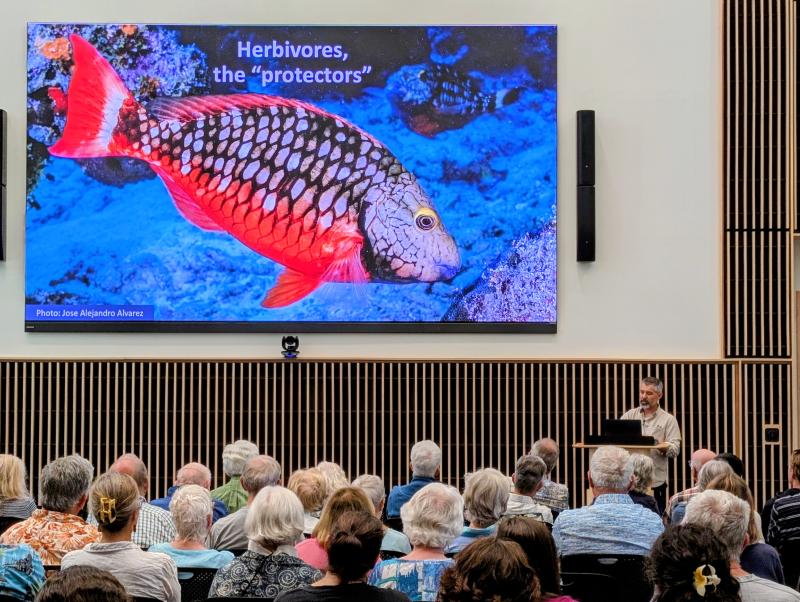 Bigelow Laboratory for Ocean Sciences presents “Resilient Reefs: How Algae-Grazing Fish Maintain Balance in Coral Ecosystems.” CANDI JONETH/Boothbay Register
 Dr. Sara Swaminathan. CANDI JONETH/Boothbay Register
 CANDI JONETH/Boothbay Register
 Dr. Doug Rasher. CANDI JONETH/Boothbay Register
 CANDI JONETH/Boothbay Register
Bigelow Laboratory for Ocean Sciences presents “Resilient Reefs: How Algae-Grazing Fish Maintain Balance in Coral Ecosystems.” CANDI JONETH/Boothbay Register
Dr. Sara Swaminathan. CANDI JONETH/Boothbay Register
CANDI JONETH/Boothbay Register
Dr. Doug Rasher. CANDI JONETH/Boothbay Register
CANDI JONETH/Boothbay Register
CANDI JONETH/Boothbay Register
Bigelow Laboratory for Ocean Sciences presents “Resilient Reefs: How Algae-Grazing Fish Maintain Balance in Coral Ecosystems.” CANDI JONETH/Boothbay Register
Dr. Sara Swaminathan. CANDI JONETH/Boothbay Register
CANDI JONETH/Boothbay Register
Dr. Doug Rasher. CANDI JONETH/Boothbay Register
CANDI JONETH/Boothbay RegisterBigelow Laboratory for Ocean Sciences (BLOS) presented the fourth and final Café Sci lecture of the 2026 season Aug. 12, to an audience made up of the public, fellow researchers and supporters of the organization. The lecture series was sponsored by Corient, and ranged in topics from trace metals in the Antarctic, to microbes that thrive in harsh environments, how technology is leading to the discovery of new marine species and the final presentation, "Resilient Reefs: How Algae-Grazing Fish Maintain Balance in Coral Ecosystems."
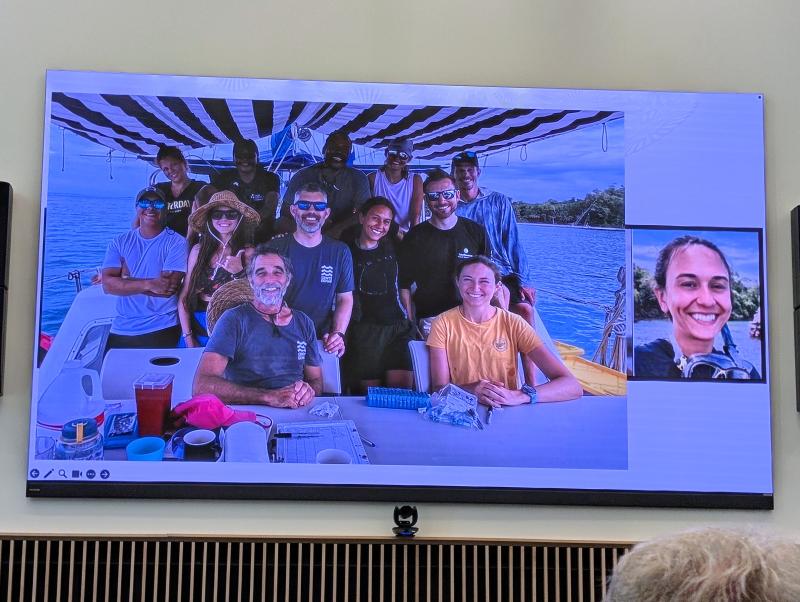
Senior research scientist Dr. Doug Rasher and postdoctoral scientist Dr. Sara Swaminathan gave presentations before taking questions from attendees both in-person and on Zoom. Their talks highlighted the critical role herbivorous fish play in maintaining the health of their studied reefs off the coasts of Panama, Belize and the Dominican Republic — locations that permitted the researchers to observe both healthy and declining reefs in proximity. Threats from overfishing and climate change lock the reef system into a degraded state by serving as ideal conditions for algal and seaweed blooms that cover the reefs, creating feedback loops that prevent coral replenishment and suffocate baby coral, outcompeting them and changing the water chemistry in their favor.
Understanding causes and consequences of these “state shifts” (when an ecosystem loses habitat-forming, foundational species and therefore shifts from a stable condition to a disturbed condition) is the driving force behind Rasher’s nearly 20-year scientific inquiry. He and his team, including Swaminathan, use in situ observations to research species interactions. They also use lab sample-analyses and surveys across varying sizes and trophic levels, from the smallest producers to the largest consumers in the marine food web, with a watchful eye toward trophic cascades (when disruption of one food level causes population shifts up or down the entire web).
They use “DNA barcoding” to understand how distinct species, like parrotfish and surgeonfish, prevent harmful blooms. Their findings reveal that while many fish have unique diets, other fish’s ecological roles shift as reefs degrade. Some species appear to rise to the occasion by consuming larger amounts of invasive algae and seaweed on damaged reefs. These findings are important because they steer conservation efforts, both for the species that provide a reef’s natural defense and for managers who are becoming better equipped to develop successful strategies for reef restoration/conservation and sustainable fishing policies that work to prevent ecosystem collapse.
Reef ecosystems are immensely valuable from an economic perspective, said Rasher, providing goods and services that support over a billion people worldwide; reefs also contribute to cultural identity. To help maintain these benefits, the researchers suggested supporting ecotourism, which can bolster coastal economies and reduce local reliance on fishing, thereby lessening the pressure on the marine life that keeps the reefs healthy.
Marine herbivores act as “guardians” of coral reef ecosystems: After a disturbance, reefs either recover through coral replenishment or shift to a degraded state of seaweed/algae dominance, said Rasher. Herbivorous fish are critical because they graze the reef intensively, sometimes biting a single patch of the reef 80,000 times a day to keep harmful seaweeds in check, said Swaminathan. Further, herbivore diversity is vital because different species have evolved adaptations to eat different types of seaweeds and algae. This "niche partitioning" ensures the safety of the reef system.
The lecture will be viewable on BLOS’s YouTube channel in the coming weeks.