Maine's lesser-known revolutionaries
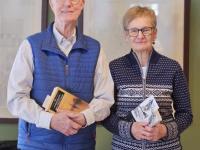
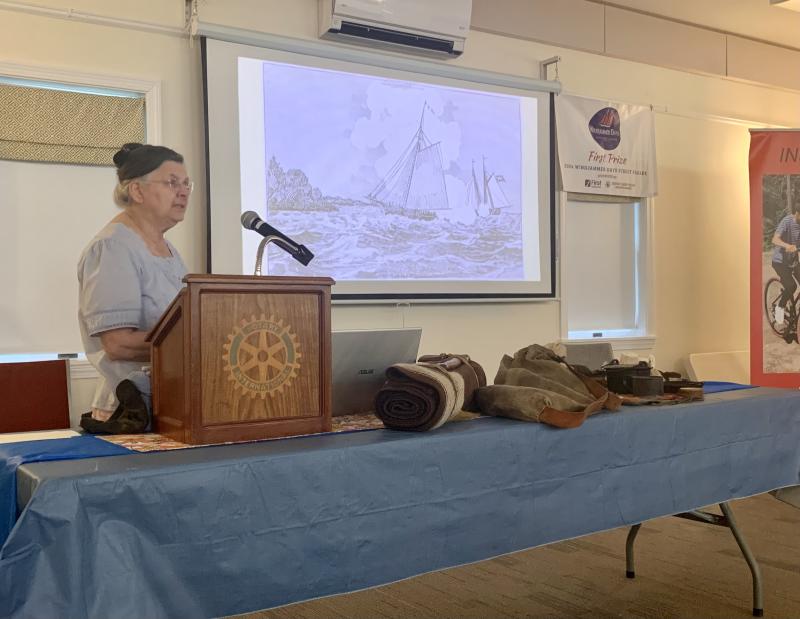 Lincoln County Historical Association Education Director Louise Miller shines new light July 15 on Maine's places and people who helped the patriot cause. ISABELLE CURTIS/Boothbay Register
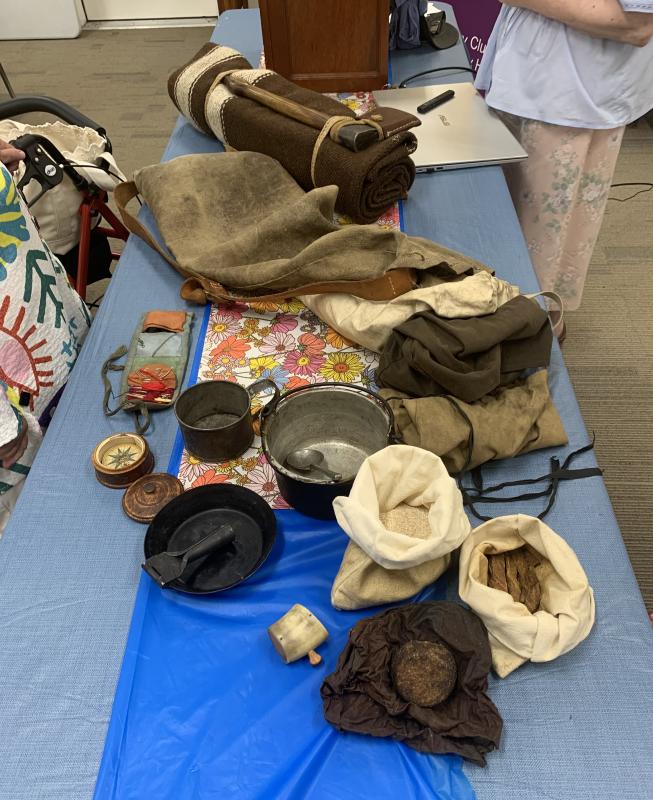
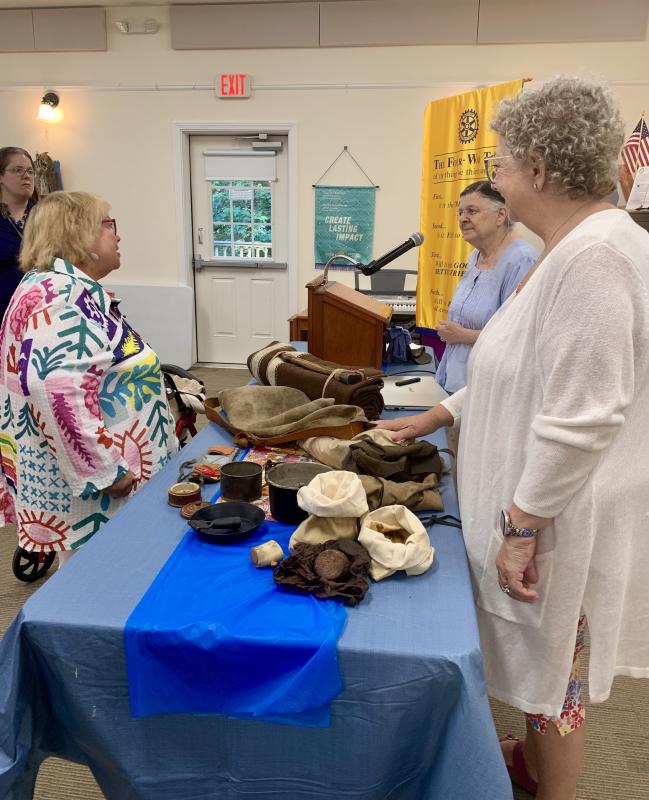 Guests peruse a typical travel pack of a Continental soldier. ISABELLE CURTIS/Boothbay Register
 ISABELLE CURTIS/Boothbay Register
Lincoln County Historical Association Education Director Louise Miller shines new light July 15 on Maine's places and people who helped the patriot cause. ISABELLE CURTIS/Boothbay Register
Guests peruse a typical travel pack of a Continental soldier. ISABELLE CURTIS/Boothbay Register
ISABELLE CURTIS/Boothbay Register
ISABELLE CURTIS/Boothbay Register
Lincoln County Historical Association Education Director Louise Miller shines new light July 15 on Maine's places and people who helped the patriot cause. ISABELLE CURTIS/Boothbay Register
Guests peruse a typical travel pack of a Continental soldier. ISABELLE CURTIS/Boothbay Register
ISABELLE CURTIS/Boothbay RegisterAs America celebrates its 250th birthday and looks back on the legacy of our founding fathers, a local talk July 15 looked back at the enlisted men and bodyguards, shipbuilders and boat captains, indigenous chiefs and everyday Maine civilians who helped win the American Revolution.
Boothbay Harbor Memorial Library kicked off its four-part Summer Speaker Series with Lincoln County Historical Association Education Director Louise Miller’s lecture on the lesser-known participants of the American Revolution. The talk was sponsored by a grant from the Maine State Library.
1775 was a busy year, said Miller. While independence from Britain had yet to be officially declared, societal discontent and physical conflicts were escalating across the colonies, and Maine was no exception. During this time, Maine was a district of the Massachusetts Bay Colony. This meant that when the British could no longer be relied upon to protect colonial coastlines, the Massachusetts navy was formed in ‘75, partly to police Maine’s over 4,000 islands. Their flag—similar to Maine’s 1901 flag—has a pine tree on a white background with “An Appeal to Heaven” written at the top.
“I think that all the patriots … probably were thinking of that, ‘Heaven's got to be on our side through all of this,’” said Miller.
Heaven was on the patriot side in June 1775 during the war’s first sea engagement. British Lieutenant Moore of the Margaretta sailed into Machias, alongside two supply ships, demanding locals agree to protect British property if they wanted to buy goods. This did not sit well with the Mainers, and it was not long before Moore sailed off, pursued by Jeremiah O'Brien and Benjamin Foster in two smaller vessels.
They rammed the Margaretta, engaging the British in hand-to-hand combat. By the end, Moore was dead; his crew surrendered. Later, O’Brien captured more British vessels, handing over the prisoners to George Washington in Boston, said Miller.
Maine’s coast would also be the site of a crushing defeat. In 1779, the British set out to create a colony, New Ireland, around Penobscot Bay as a loyalist haven and military tactical location. The colonists went on the defensive, sending 19 warships and 25 support ships with 344 total guns (plus Paul Revere). Despite their much smaller number (eight ships and 160 men), the British withstood a 21-day siege. Unable to retreat due to additional royal forces, the patriots were forced to burn their remaining ships in Bangor and walk home.
“The battle was one of the greatest British victories of the American Revolution. The loss of the 43 ships proved to be the greatest American naval defeat until Pearl Harbor in 1941."
Miller highlighted individual contributions, such as Chief Orono, who, alongside other Penebscot leadership, pledged himself to the patriot cause, and Georgetown native Samuel McCobb, founder of the Lincoln County regiment and participant in the disastrous 1779 Penobscot Bay battle. Reuben Colburn of Pittston helped build over 200 bateau boats in two weeks for the Benedict Arnold-led expedition to attack British Quebec. Colburn served as a boat maintenance man and guide to Maine riverways during the campaign.
However, one of the most interesting stories comes from the recently discovered account of Samuel Houston Jr. of present-day Searsport. Houston was selected to be one of Washington's "lifeguards" (bodyguards), whose requirements included being as tall or taller than the over 6-foot Washington, handsome, well-built, well-drilled, sober, reliable and intelligent. He accompanied the General to the Battles of Trenton, Monmouth, Brandywine Creek and Georgetown, and spent the winter at Valley Forge.
He was also the baggage master for Washington's luggage during the 1776 Christmas crossing of the Delaware, and recalled jumping up to his waist in frigid waters to right the floundering wagon carrying the man's effects. Houston got his moment to shine while completing espionage missions behind enemy lines during Monmouth, earning the rank of captain and the gift of Washington's personal pocket watch. The watch is still in the Houston family today, said Miller.
She ended by calling upon a letter from Abigail Adams, who wrote to husband John, detailing the ringing bells, celebratory gunfire and joyful faces as the colonies’ independence was declared from the Boston statehouse: “Here we are this evening, 250 years later, after Abigail Adams and the citizens of Boston heard the Declaration of Independence, and great attention was given to every word.”
The next talk is Bowdoin Librarian James Tanzer’s “Life & Liberty: Enslaved Residents of Historical Lincoln County on the Eve of Independence” on July 30 at 6 p.m. at American Legion Post #36.