No Answers, Only Questions
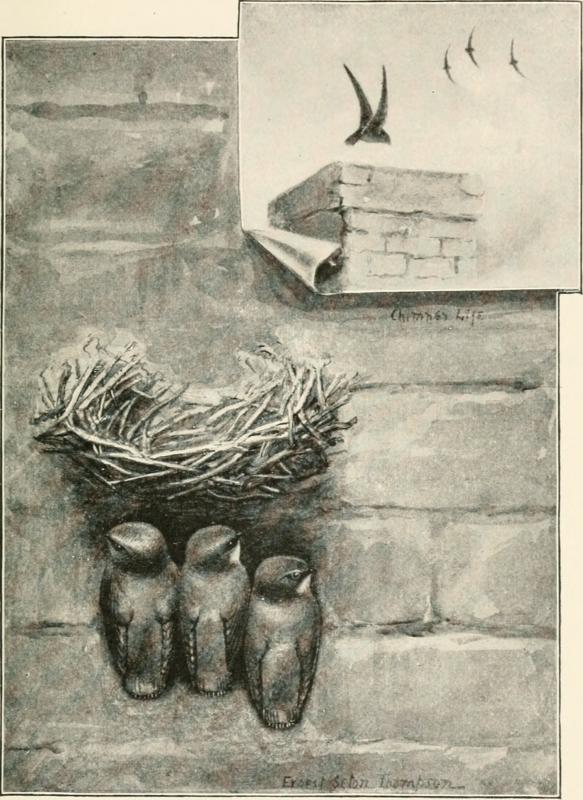 Chimney swifts glue together tiny twigs with their own saliva to make their nests, usually, today, in brick chimneys although originally in hollow trees. Illustration by Canadian naturalist and artist Ernest Thompson Seton (for a time he used Ernest Seton Thompson as he did when he signed this illustration) from the 1898 book by Florence Merrian Baily, "Birds of village and field: a bird book for beginners." Image courtesy of WIkimedia Commons.
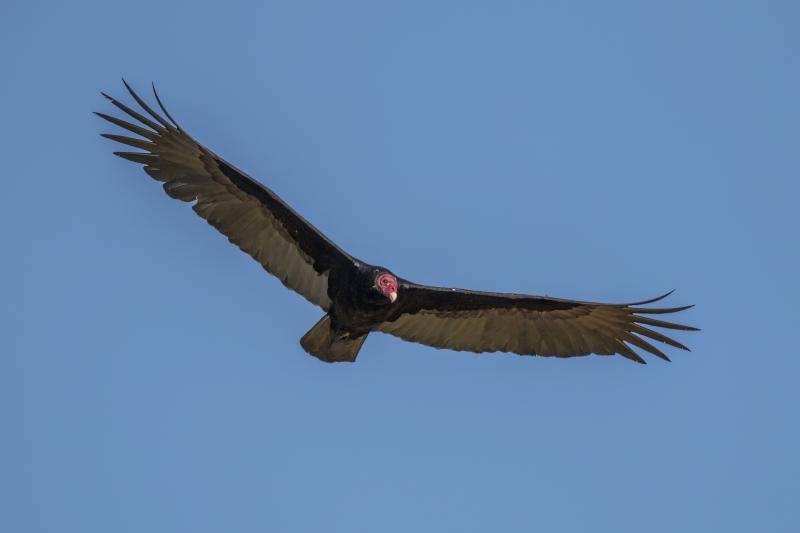 Turkey vultures spend long hours high above the earth in flight—but what do they do when a storm approaches? Photo by Charles J. Sharp courtesy of Wikimedia Commons.
Chimney swifts glue together tiny twigs with their own saliva to make their nests, usually, today, in brick chimneys although originally in hollow trees. Illustration by Canadian naturalist and artist Ernest Thompson Seton (for a time he used Ernest Seton Thompson as he did when he signed this illustration) from the 1898 book by Florence Merrian Baily, "Birds of village and field: a bird book for beginners." Image courtesy of WIkimedia Commons.
Turkey vultures spend long hours high above the earth in flight—but what do they do when a storm approaches? Photo by Charles J. Sharp courtesy of Wikimedia Commons.
Turkey vultures spend long hours high above the earth in flight—but what do they do when a storm approaches? Photo by Charles J. Sharp courtesy of Wikimedia Commons.
Chimney swifts glue together tiny twigs with their own saliva to make their nests, usually, today, in brick chimneys although originally in hollow trees. Illustration by Canadian naturalist and artist Ernest Thompson Seton (for a time he used Ernest Seton Thompson as he did when he signed this illustration) from the 1898 book by Florence Merrian Baily, "Birds of village and field: a bird book for beginners." Image courtesy of WIkimedia Commons.
Turkey vultures spend long hours high above the earth in flight—but what do they do when a storm approaches? Photo by Charles J. Sharp courtesy of Wikimedia Commons.We are fortunate to have a very leafy green neighborhood. Maples, ash, ornamental crabapples, the occasion red oak, a few black locust—the sightline from our porch in June and July is of beautiful verdant curtains made up of thousands of leaves and with the rounded green domes of taller trees reaching up into the sky behind houses and along distant streets.
There is, though, this one tree. An elm, across the street, whose top branches lost all their leaves a few years ago.
Since then, it has become one of the most popular spots in town for chimney swifts. They fly into the tangle of thin dead branches and try to quickly snap off a twig in their bill before fluttering out and away, giving their characteristic chittering calls. Each spring, the swifts start with this twig-fetching behavior within about a week of arriving back from their wintering grounds in Brazil. At that point, they need to find new tiny twigs to glue with their own saliva into the little half-cup nests they build on the inside walls of chimneys. The nests had to have been built and eggs laid in them weeks ago. Yet the chimney swifts have not stopped flying into that tree to get twigs almost all day, every day. Why, we wonder? Are they just practicing what must be the difficult art of securing a twig off a tree when flying around at high speed? Are they constantly adding to their nests?
That’s just one of the many questions that come to mind every day as we watch the birds and bugs and other animals around us. Some of the questions probably have answers that we could eventually find in a book or online. But by then, with the wonder and beauty of the natural world, we’ll just have many more interesting (at least to us) questions.
For example, we looked up into the sky yesterday to see twenty big, black turkey vultures circling together high overhead, their silvery underwings glinting in the sun. Given the fact that this is the nesting season, we wondered, why would there be twenty vultures hanging out together? Are there some that don’t breed in a given year and instead hang out together? Do some fail in their nesting attempt and wander around with other vultures for the rest of year after that? Does one parent vulture stay with the eggs or young while the other hangs out with other vultures looking for food?
A few minutes later, a massive thunderstorm rolled in overhead. Another question came to mind: What do vultures do when they’re flying around and find themselves in the path of a thunderstorm?
We did get the answer to that question, at least for those twenty vultures in that one instance. They dropped like fighter jets at high speed from the heights to make it down to a favorite roost site with tall trees along a steep bank beside the stream that runs over the hill behind our house. Apparently, they thought it was safer to be sitting in a tree than to be swept away in flight by the winds and rain and hail of a thunderstorm.
LIke the turkey vultures, we took made haste ahead of the storm, though our ponderings continued—from inside the safe confines of our house!
Jeffrey V. Wells, Ph.D., is a Fellow of the Cornell Lab of Ornithology and Vice President of Boreal Conservation for National Audubon. Dr. Wells is one of the nation's leading bird experts and conservation biologists. He is a coauthor of the seminal “Birds of Maine” book and author of the “Birder’s Conservation Handbook.” His grandfather, the late John Chase, was a columnist for the Boothbay Register for many years. Allison Childs Wells, formerly of the Cornell Lab of Ornithology, is a senior director at the Natural Resources Council of Maine, a nonprofit membership organization working statewide to protect the nature of Maine. Both are widely published natural history writers and are the authors of the popular books, “Maine’s Favorite Birds” (Down East Books) and “Birds of Aruba, Bonaire, and Curaçao: A Site and Field Guide,” (Cornell University Press).