One Good Tern Deserves at Least Two More
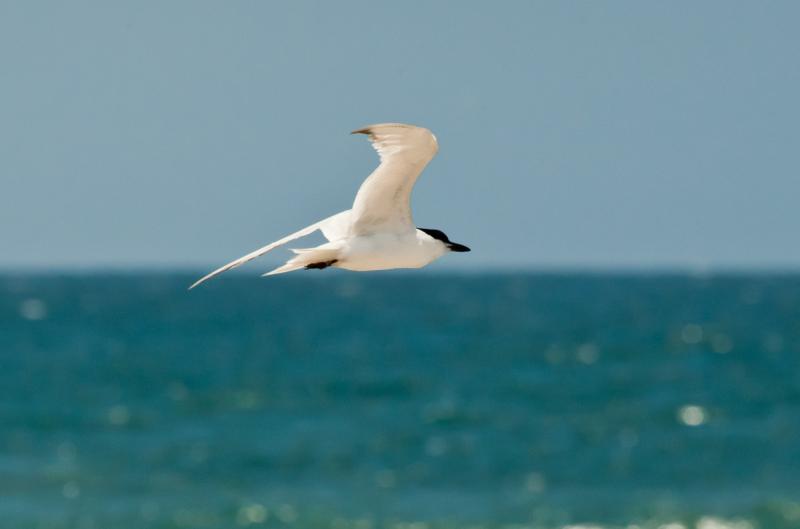 A gull-billed tern is one of at least three rare terns that have been seen in Maine over the past few weeks. One bird has been observed and photographed in the Popham Beach and Seawall Beach area. Photo by USFWS, courtesy of Wikimedia Commons.
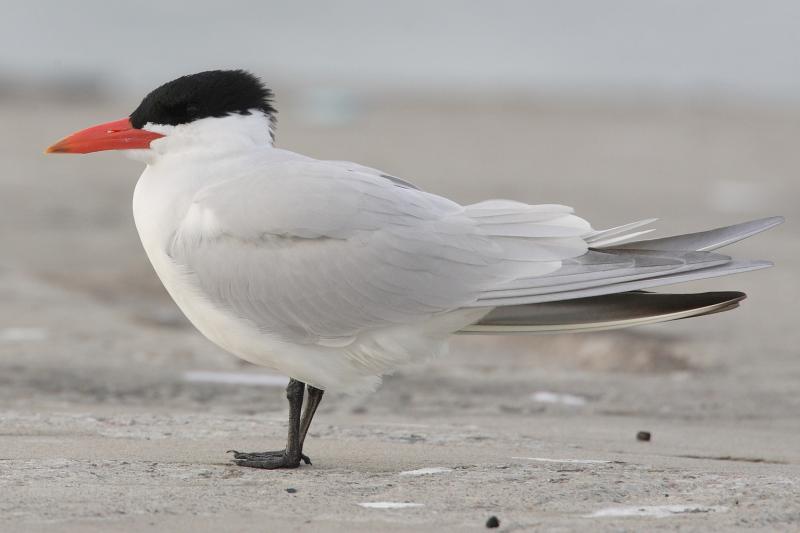 Caspian terns are the largest tern species in the world. They nest north and south of Maine, so migrants occasionally pass through the state. Photo by mdf. courtesy of Wikimedia Commons.
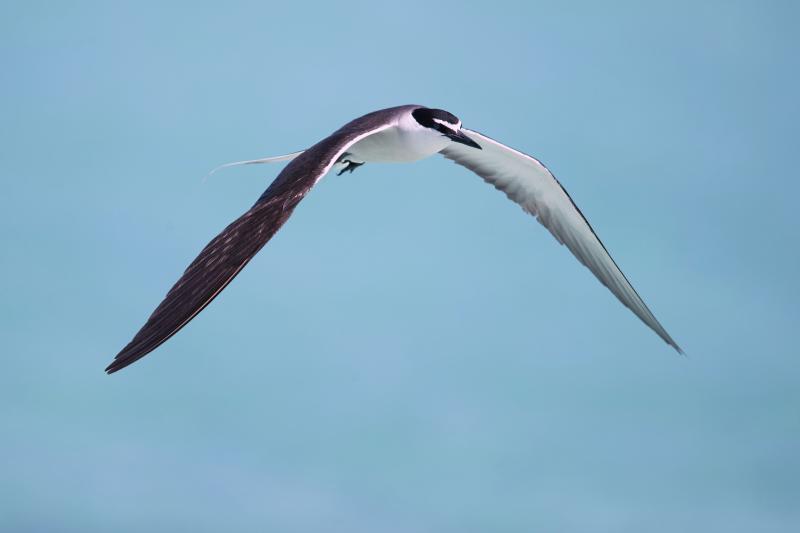 Bridled terns nest on islands across the tropics no closer to Maine than the Bahamas. One has been spotted around tern colonies from Eastern Egg Rock off New Harbor south to Stratton Island off Scarborough. Photo by JJ Harrison, courtesy of Wikimedia Commons.
A gull-billed tern is one of at least three rare terns that have been seen in Maine over the past few weeks. One bird has been observed and photographed in the Popham Beach and Seawall Beach area. Photo by USFWS, courtesy of Wikimedia Commons.
Caspian terns are the largest tern species in the world. They nest north and south of Maine, so migrants occasionally pass through the state. Photo by mdf. courtesy of Wikimedia Commons.
Bridled terns nest on islands across the tropics no closer to Maine than the Bahamas. One has been spotted around tern colonies from Eastern Egg Rock off New Harbor south to Stratton Island off Scarborough. Photo by JJ Harrison, courtesy of Wikimedia Commons.
Bridled terns nest on islands across the tropics no closer to Maine than the Bahamas. One has been spotted around tern colonies from Eastern Egg Rock off New Harbor south to Stratton Island off Scarborough. Photo by JJ Harrison, courtesy of Wikimedia Commons.
A gull-billed tern is one of at least three rare terns that have been seen in Maine over the past few weeks. One bird has been observed and photographed in the Popham Beach and Seawall Beach area. Photo by USFWS, courtesy of Wikimedia Commons.
Caspian terns are the largest tern species in the world. They nest north and south of Maine, so migrants occasionally pass through the state. Photo by mdf. courtesy of Wikimedia Commons.
Bridled terns nest on islands across the tropics no closer to Maine than the Bahamas. One has been spotted around tern colonies from Eastern Egg Rock off New Harbor south to Stratton Island off Scarborough. Photo by JJ Harrison, courtesy of Wikimedia Commons.Terns eat fish. We all know that (don’t we?). Many’s the time we have watched these graceful, long-winged birds hovering over the ocean surface before plunging down into the water headfirst or with a dramatic swoop to snatch up a manageable fish.
But wait.
Surprise, surprise—not all terns specialize in fish (and even those that sometimes eat things other than fish).
The Maine birding world has been abuzz this past week by the appearance of a tern species that is famous for eating things other than fish. A gull-billed tern appeared at Popham Beach a few weeks ago and has since been spending time also over on neighboring Seawall Beach.
As its name suggests, the gull-billed tern has a bill that is stouter than the slim, sharply-pointed bills of most terns—species like common terns and least terns, for example. Its different-shaped bill is useful for catching large, flying insects, crabs, even lizards, frogs, and the occasional baby bird. When it does eat fish, it’s more likely to have procured it by stealing it from tern species that specialize in fishing.
Gull-billed terns have a global distribution. They nest across parts of southern Europe, Asia, a few spots in northern Africa, and in South America, Central America, the Caribbean, Mexico, and into the U.S. Here in the U.S. they have some small breeding colonies in California, and they also nest in small, scattered coastal colonies across the Gulf States and from Florida north, occasionally to Long Island, New York, and coastal New Jersey.
Our memories of gull-billed terns, with their notable black bills and legs, go back to our having watched them chase dragonflies over flooded fields on May trips to southern New Jersey.
Here in Maine, they are very rare visitors, so naturally, birders have been on the move to try to see it.
In seeking out that rarity, birders located another visiting tern species in the Popham Beach/Seawall Beach area: a Caspian tern. This gull-sized tern, with an orange bill resembling a carrot, is not as rare here in Maine as the gull-billed tern. There are breeding populations of this species north of Maine, so birds pass through in migration but also occasionally wander in during the summer, as this bird has done.
Caspian terns, like gull-billed terns, have a cosmopolitan breeding range that includes not only Europe, Asia, Africa, and North America, but also Australia. They winter in Central and South America but do not nest there.
Perhaps the rarest tern to share Maine’s shores in recent weeks is the very tropical bridled tern. What’s probably the same individual has been seen in June and early July from Eastern Egg Rock off New Harbor to Pond Island near Popham to Stratton Island off Scarborough. All these locations are islands with large breeding colonies of terns. The bridled tern is apparently checking them out, perhaps hoping to find another bridled tern around or at least seeing if it can learn the best feeding places by watching where the terns nesting on these islands go to fish.
We’ve been fortunate to have been able to watch bridled terns (and some other cool tern species) coming and going throughout hot tropical days from some special islands off the south coast of Aruba near San Nicolas that host a remarkable density of nesting terns in a small space.
Pretty fascinating to think that the closest bridled tern nesting colony to Maine is in the Bahamas, about 1,200 miles, though the birds are known to regularly follow the warm Gulf Stream north at least as far as offshore from North Carolina.
These three interesting visitors have made it clear: one good tern doesn’t deserve another; it deserves two more!
Jeffrey V. Wells, Ph.D., is a Fellow of the Cornell Lab of Ornithology and Vice President of Boreal Conservation for National Audubon. Dr. Wells is one of the nation's leading bird experts and conservation biologists. He is a coauthor of the seminal “Birds of Maine” book and author of the “Birder’s Conservation Handbook.” His grandfather, the late John Chase, was a columnist for the Boothbay Register for many years. Allison Childs Wells, formerly of the Cornell Lab of Ornithology, is a senior director at the Natural Resources Council of Maine, a nonprofit membership organization working statewide to protect the nature of Maine. Both are widely published natural history writers and are the authors of the popular books, “Maine’s Favorite Birds” (Down East Books) and “Birds of Aruba, Bonaire, and Curaçao: A Site and Field Guide,” (Cornell University Press).