‘A lot to think about here’
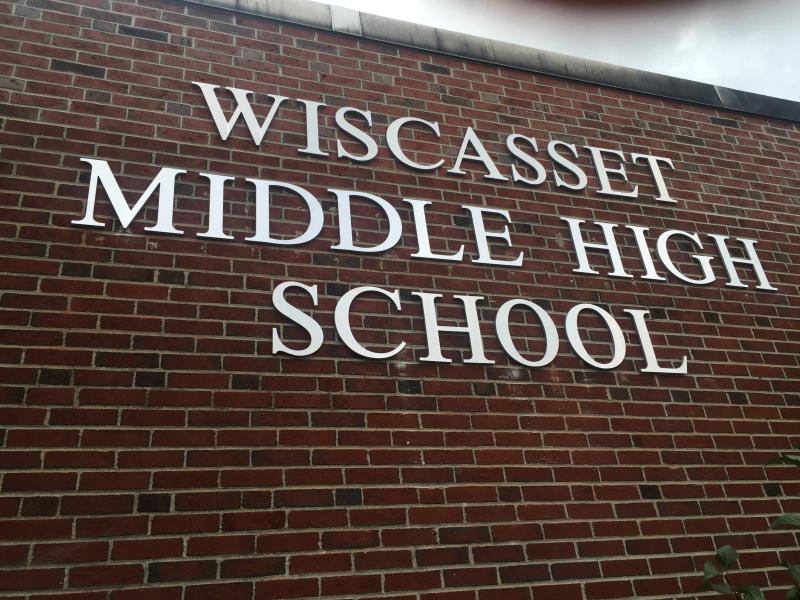
Are Wiscasset Middle High School students feeling safe at school? Results on that varied in two surveys and over time. And Principal Sarah Hubert suggested, to some students, "feeling safe" might mean people speaking nicely and, to others, it might mean physical safety.
Hubert shared numbers with the school committee Jan. 14 from the Positive Behavioral Interventions and Supports (PBIS) school climate survey and the Maine Integrated Youth Health Survey (MIYHS).
The PBIS survey done last month showed improvement from May 2025 on five of the nine questions listed.
“I like school” rose from 2.27 to 2.32 on a scale from 1 to 4; “I feel successful at school” rose from 2.67 to 2.7; “I feel my school has high standards for achievement” rose from 2.43 to 2.59; “My school sets clear rules for behavior” rose from 2.54 to 2.77; and “The behaviors in my class allow the teachers to teach” rose from 2.58 to 2.69.
“Teachers treat me with respect” dropped from 3.04 to 2.97; “Students are frequently recognized for good behavior” dropped from 2.52 to 2.38; “I know an adult at school that I can talk with if I need help” fell from 3.19 to 3; and “School is a place at which I feel safe” fell from 2.7 to 2.62.
Hubert said of the "feel safe" numbers, "I don't know, that's not a significant decrease, but it's a little bit. Maybe we could look at it consistently. When we ask in general if kids feel safe at school, what does that mean ... Do they feel like they can walk down the hallway and people will talk nicely to them, or it could be a physical thing. What is that safe feeling? So whenever I ask that question, or whenever it's asked, I'm like, 'How is a kid interpreting that?'" When a student does not feel safe, Hubert continued, "We have a social worker available. We have guidance available. We have places where kids can talk about this, and then we can ... see what that is, and progress."
On recognizing good behavior, Hubert said students are being recognized at assemblies with school pride cards for engagement, respect, academics and more, "but now we're ramping it up a little bit," with an end of the month party of snacks and games for card earners. "Kids love food and to be social, so that's their reward." Fielding a committee question, Hubert said the snacks are healthy ones.
And as for the students knowing an adult at school they can talk to, Hubert said, "That should really be a 4, because these kids talk to all the adults here."
The MIYHS results Hubert also shared Jan. 14 were from last February; 91 WMHS high schoolers took part: 75% reported they "feel safe at my school," up 12% from the last MIYHS in 2023; 29% said they had ever been bullied at school, down 11%; 11.6% said they have considered suicide, down 9.4%; 34.1% said they have vaped, down 1.1%; more students than in 2023 had tried alcohol and marajuana or had consumed it in the past 30 days; and 76.2% of students said there is at least one adult in school who cares about them, up 5.6%.
Hubert told the committee the school uses the data from both surveys to aid its work on student behavior, the student handbook and grant-seeking. In her written leadership update for the meeting, she added she will work with Healthy Lincoln County and a grant coordinator on student "programming and activities that align with the data (and) best practices for Substance Use Prevention and Self Awareness Development. This will coincide with initial steps of establishing the School & Community Engagement Collaborative." As Hubert described last month, the collaborative will include the Boosters, Partners in Education (PIE), businesses and others.
Hubert said the PBIS survey is tied to a program the school has been taking part in via a Maine Department of Education grant.
The December survey was the third PBIS survey for WMHS students, families and staff; and each time, fewer families have taken part, Hubert noted. “I don’t know what that necessarily tells me. And do I rely on these six people to say that, in their perspective, our school climate is increasing? If you just look at numbers, I would say yes, but it would be great if more families would just participate.”
How to get parents and the public more involved in how the schools are run is one of this school committee's main focuses, member Doug Merrill said on an audience question. "Look around," he said. The attendees at meetings are mostly those who are a part of the meetings, he said.
Superintendent of Schools Dr. Kim Andersson said, for three years, she has had a parent advisory group she invites all parents to, and she always gets the same four to six moms.
Committee member Christopher Hart asked if surveys' being emailed “is a barrier in our community.”
Maybe, Hubert said. But when she sends out the school’s weekly newsletter email, she can see that about 500 people read it, she added.
"I know we want more input from parents and maybe if there's another magical way to do it, we'll try it."
Hubert said the numbers she presented from the surveys were all from students’ responses.
“A lot to think about here,” Hart said.