From shoreline to WES classroom
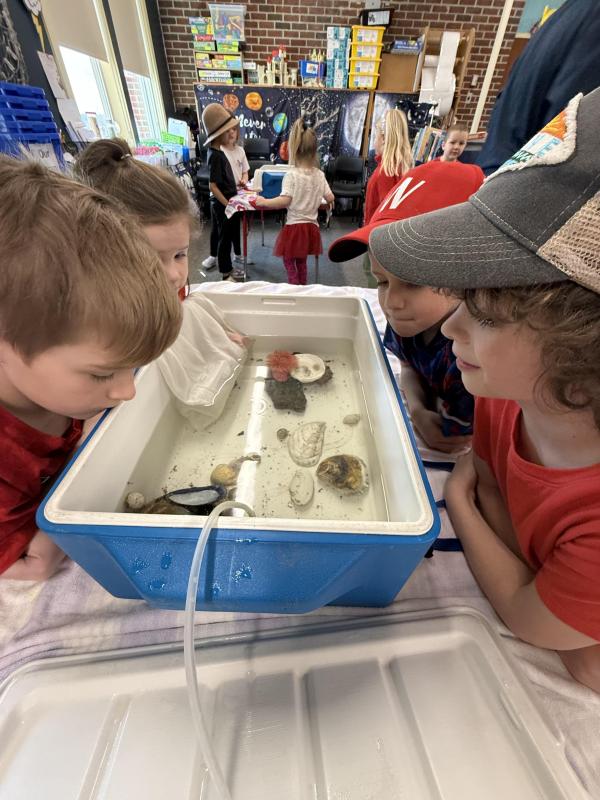 WES students at a touch tank. Courtesy photo
WES students at a touch tank. Courtesy photo
WES students at a touch tank. Courtesy photo An educator with Chewonki Foundation spends much of her time visiting local schools and bringing the shoreline to students — giving them a chance to experience tide pools up close.
She visited Wiscasset Elementary School this week and set up four touch tanks in the library. By the time the kindergarteners filed in, sea urchins, crabs, mussels and starfish were waiting for them.
Before anyone touched anything, the educator talked about where the animals came from — the rocky intertidal zone. She explained that it's the stretch of shoreline that's underwater at high tide and exposed to the air when the tide goes out. Conditions there change constantly, and the animals that live there have to deal with all of it.
She asked the students to guess how long they thought it took for the tide to rise and fall, and the guesses ranged from six hours to 100 million hours.
The students learned that mussels clamp their shells shut to keep water inside, sea urchins wedge themselves into cracks in the rocks, and crabs move in and out with the tide.
The students learned how to hold crabs from behind, with a hand around the shell so the claws can't reach their fingers. It also keeps the crab from getting squeezed, the educator explained. The looks on the students' faces showed their excitement.
The students made their way around to each of the touch tanks, taking turns learning hands-on. One boy picked up a sea urchin and held it in both hands, completely still, watching its tiny tube feet move.
The touch tanks showed how animals survive along Maine’s rocky shoreline. The educator explained that mussels make sticky fibers called byssal threads that anchor them in place. Without them, waves would tear them off the rocks. Crabs can regrow lost legs over several molts. In a place with predators and rough water, that ability can make a big difference.
One student asked whether urchins have brains. The question turned into a short conversation about how different animals sense the world — not the way humans do, but in ways that work for where they live.
Students also learned how the animals in the tanks are connected. Urchins graze on algae. Mussels filter water. Starfish eat mussels and help keep their numbers in check. Each piece of that system depends on the others — take one out, and things start to change.
Living on the coast and attending school at Wiscasset Elementary, the students can look out their classroom windows and see the shoreline. For a while that morning, a small piece of it sat in the middle of the school library.