Signs
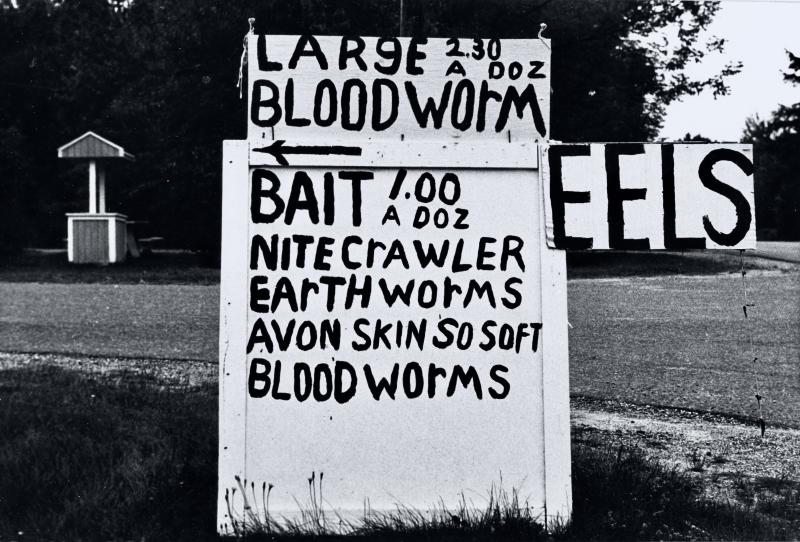 Photo by Robert Mitchell
Photo by Robert Mitchell
Photo by Robert MitchellLong before I came to Maine, photography interested me. I didn’t know much about the process but enjoyed the adventure. It was a cool way for me to “focus," which was always a challenge due to some crossed wires in my brain. Looking through the tiny viewfinder helped me stay on subject without distraction, and keep an eye out for fun things. I started processing my own black and white films in, around or about 1965. “Magic in a box,” I used to call it. After high school and college I continued to photograph with no particular intention other than pure enjoyment.
A bit of a tragedy while I was teaching outside New York City discouraged me, but did not end my fascination with camera and film. In the early ’70s when I started teaching, I would make occasional trips via my old ’57 Harley “Hydra-Glide," to visit family in central Pennsylvania. It was a pretty nice ride on the newly opened stretch of I-80, passing the Delaware Water Gap, and on west to Clearfield, a town just off the Interstate. Because I didn’t have any bags for the bike nor passengers, I built a large box into which I could place personal objects, food and some tools in case of a breakdown. It was a handy item and well used.
During one of my trips west, I had decided to move some of my processed film back to Pennsylvania for safe keeping and future printing. Somewhere along my ride, the lid of my invention cracked open just enough to allow air to suck the lighter contents (i.e., film) out of the box littering the highway. I only became aware of this situation when being passed by a semi on a long hill stretch several hours into my trip. When I pulled into a rest stop to inspect the situation, I found that almost all of my film had blown out along the highway, unrecoverable.
I got over my loss and continued to photograph. One distinct fascination, early on, was signs. Something about the way subjects were presented intrigued me. It seemed that a sign was more than just information, it was a statement about the village, town and people of a specific area. I made lots of photographs (not many survived my open box experience) of random subjects like “JESUS SAVES,” underwritten by a handpainted “all others pay cash” response!
“WATCH OUT FOR THE LOCOMOTIVE” was another favorite. But perhaps my all-time favorite was the “CHEW MAIL POUCH TOBACCO” barns. This was a unique campaign promoted by a Wheeling, West Virginia company between 1891 and 1992. These were handpainted signs. “Treat yourself to the best,” often followed by the comment, “W. Va. Coleslaw.” The painter of many barns, Harley Warrick was said to have painted over 20,000 barns in his lifetime. The barn owners only received a few bucks for the signage but got a free paint job. I only tried Mail Pouch once and almost died! It was a dare.
Which leads me to my photo share for today. I made this image many years ago. I recall the setting, but for the life of me, can’t recall where it was. I bet there are folks among us who would know. I couldn’t help myself. This was too classic a statement to pass by and it really made me think about the combination of items that were available at the time, especially “Skin So Soft.” Why, with all the more unified essentials advertised, would this product be listed? Then it dawned on me. The professionals who harvest our flats must be overrun with bugs, especially if there is no breeze to keep insects at bay (no pun intended). What more perfect item to accompany those who work so hard to collect clams, worms, mussels and backache. So often we see these hardworking folk out digging topless, a perfect target for the insect population. You see, there’s the story. The sign, in my head, was unique, but the possibilities of a greater story, magnifique! A sign of the times!
Look with a different eye and you will discover interesting things.
Have a good day.