Temp bans, other questions head to November ballot
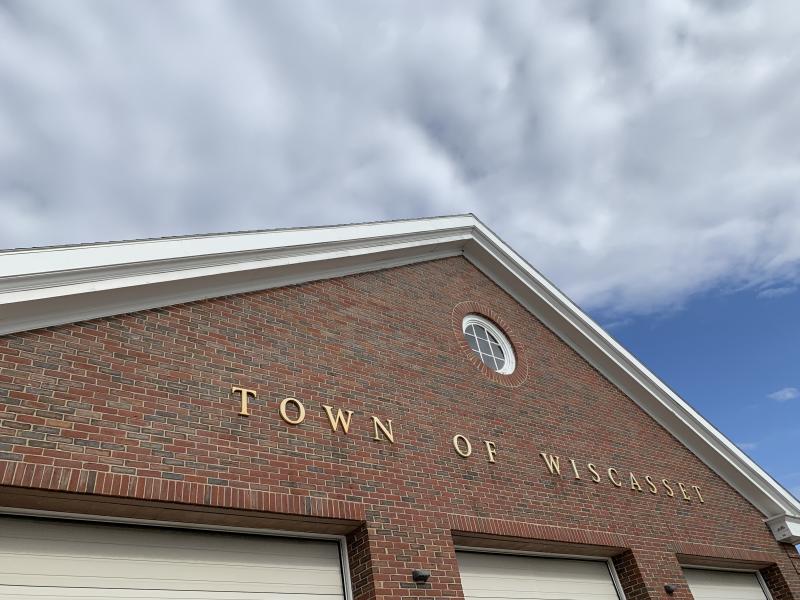
It’s official: Wiscasset voters have several decisions to make Nov. 3, involving mobile home park rents, data centers, the ordinance review committee (ORC) and use of some fire department services. Selectmen Sept. 1 passed the special town meeting warrant with those questions and this non-binding one the board had already planned to put on the warrant: “Should Wiscasset explore the possibility of a single high school serving students from multiple area towns?”
The board had two options to consider offering voters about the ORC: Rework it or end it. Selectman Heather Jones wanted to give reworking a chance. And Code Enforcement Officer George Chase said the ORC, through its members, adds to public input on town rules.
Other selectmen said the public input can come at selectboard meetings, which draw more residents. Depending on the ordinance, different staff members would lead the drafting, such as the CEO for zoning, Selectmen’s Chair Alissa Eason said.
Vice Chair Pamela Dunning said Wiscasset has very talented, well-informed staff. “I find it inappropriate to have volunteers work on things that paid staff are doing, because I think it takes away from what you are paying the staff members for,” Dunning said.
Past ORC member Jason Putnam recalled it as a great committee that put in a lot of work. And he advised on the “drudgery” involved.
“It was a churning, a churning, a churning … So I just want to be sure that people understand just how much work there is, if you think you’re going to add it to your workload. You may come to regret that.”
The board voted 4-1, Jones opposed, to put the proposed discontinuance of the ORC on the warrant.
All other questions passed 5-0 to go to voters.
As discussed in recent sessions and that night, the data center moratorium and the one on rent hikes over 3% in mobile home parks would run 180 days and could face extensions if reasonable progress has been made.
The rent one, Eason explained, was “so that our mobile home citizens would not be faced with additional increases while we take the appropriate amount of time to consider this issue and see how the town of Wiscasset would like to deal with it.”
Samantha Beers, owner of Maplewood Hill, one of the parks talked about by renters Aug. 25, got up and addressed those recent comments.
“These claims of unsafe conditions and profits over people at Maplewood are untrue and honestly deeply harmful …,” she said. “We bought a sinking ship and we have worked very hard to fix all of the holes.”
The Knox County-raised Coloradan told selectmen she and her husband’s personal savings have gone into the 30-unit park she said is a small business. “And we’re not funded or backed by private equity groups or big corporations.”
Beers continued, “In 2024, our residents reached out to us to let us know they were displeased with our leadership, our management, and our operation of the property. At that point, we already had a bunch of projects planned for the property, but we added to the scopes at the request of the residents, and we reorganized how management operates, and we also opened up a line of communication directly to us with our residents. Since then, we’ve really got after it with property improvements and we’ve reinvested every penny back into the property, to the point where we’re currently operating at an $81,000 loss.”
Nearly all gross revenue has stayed in Maine, she said, citing operating costs and nearly $300,000 “on improvements alone; 96% of that went to Maine local businesses.”
Beers said the improvements have included rebuilding a leach field for almost a third of the homes, paving a road, installing 30 home remote water meters to detect leaks, replacing rotten backboards and nine of 23 power poles and updating electrical components.
“Everything a licensed electrician suggested we improve, we improved. We did extensive upgrades to the wellhouse mechanical components at the recommendation of two independent licensed water operators,” and a state inspection has found zero deficiencies, she said.
As for the leak detectors, Beers told the board, “ I get a ding on my phone whenever there’s a leak in a home … so we can take action quickly and protect our wells for the whole community and reduce service interruptions …”
Beers said there will be more projects to plan and save up for. “I genuinely wish that rents didn’t need to be as high as they are to pay for all these things, but it is the reality of today’s economy.”
She urged the board to avoid what she said feels to her “a lot like government overreach into a private business that has thus far operated more like a nonprofit.”
A Maplewood homeowner responded, buyers of parks know what they are buying. The resident said park residents have nowhere else to go, are not numbers on a spreadsheet and are not there to bestow the business its money.
Another speaker, Wiscasset’s Amy Burchstead, wondered why rent control was only being talked about for mobile home parks. And if there is rent control, maybe those property owners’ taxes should not go up because “they can’t increase the rent but their taxes are shot way up, or their insurance is shot way up, and a plumber is at least $100 an hour,” she said.
If affordable housing grows in Wiscasset, renters would have more options, Burchstead added.
Eason responded, the board received the mobile home rent control ordinance proposal and was not comfortable without knowing all the ramifications.
The moratorium would provide the time to get answers, Eason said.
The board agreed earlier this summer to the November straw vote on exploring a single high school serving multiple towns. According to Wiscasset Newspaper files, those who'd helped Boothbay Region schools and Wiscasset pursue a state grant for a consolidated grades nine through 16 school sensed their towns still want to explore things; the ballot question aims to gauge Wiscasset residents' interest. The grant try ended when a win of the state funding looked unlikely.
The proposed fire department cost recovery ordinance, which outlines certain would-be billing, does not apply to house fires, Town Manager Dennis Simmons reiterated. It would apply to hazardous material incidents; removal and disposal of hazardous waste discharges; vehicle or aircraft crashes, vehicle or aircraft fires; "water-related emergencies within a building"; "standby for utility lines in the roadway as a result of a motor vehicle crash"; and "the third and subsequent false fire and/or sprinkler alarm from the same physical location," the proposal reads.
If the user has no insurance or a claim is denied, the town, as proposed, "may bill the recipient directly," but the fire department will not withhold services for lack of payment. And a user could apply to the fire chief for a lower or forgiven bill due to hardship. The chief may then make a recommendation to the town manager.
Resident Ed Polewarczyk argued the request should not go to the fire chief, but to selectmen, as overseers of the poor.
Other business from the Sept. 1 meeting, including a discussion of Wiscasset Community Center membership rates, will be reported separately.